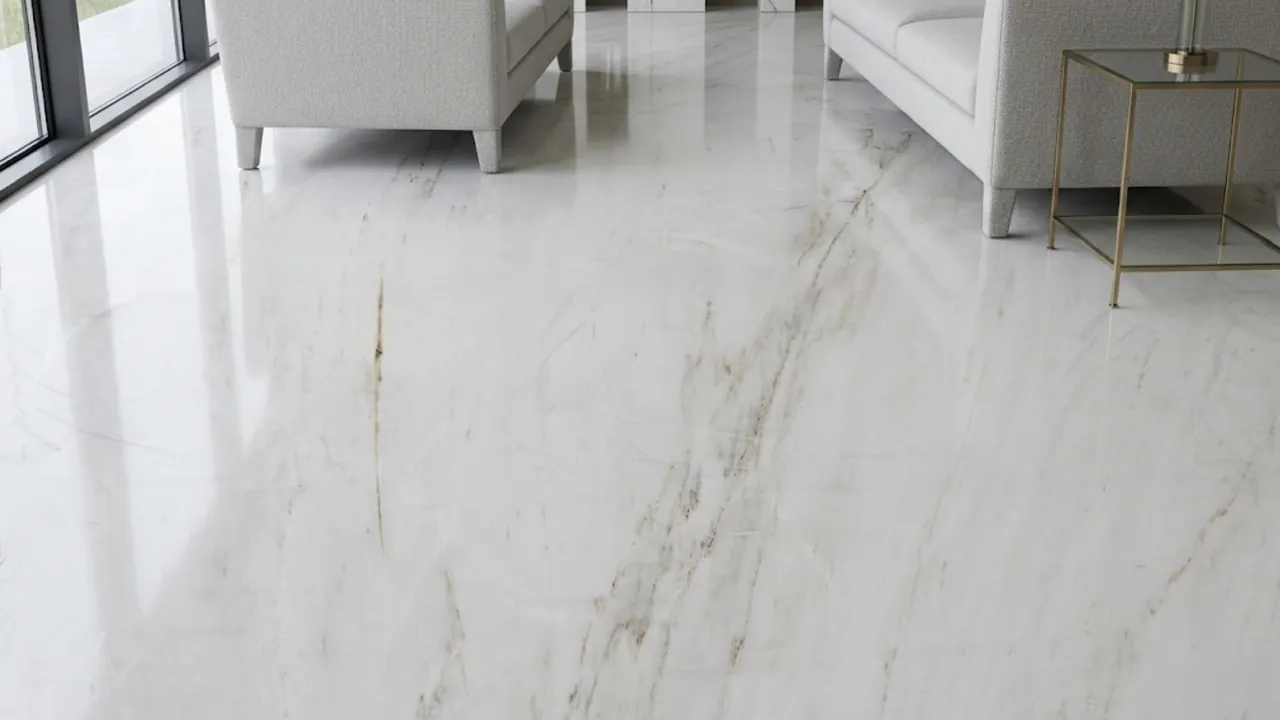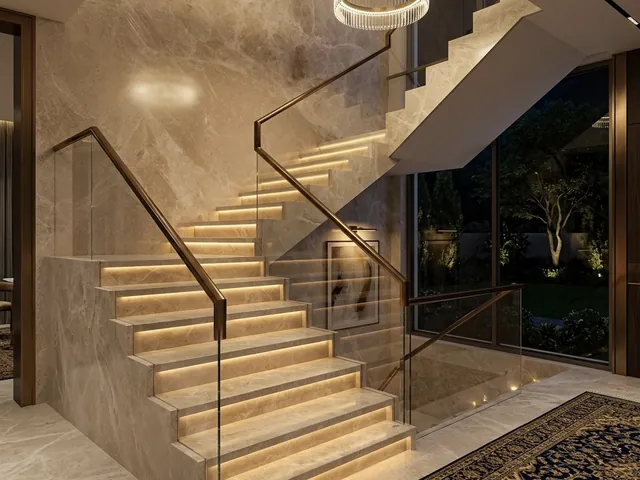
Two slabs cut from the same block can look like different stones once they are finished. The surface finish changes colour, reflection, texture, slip resistance and how much care the stone needs. Here is a clear guide to the finishes you will hear about — and you can try them yourself in the 3D viewer on our marble and granite pages.
Why the finish matters
A finish is created after the block is sawn into slabs, by grinding the surface with progressively finer abrasives, brushing it, or treating it with heat or sand. The finer the final abrasive, the smoother and shinier the surface. A rougher finish scatters light, softens colour contrast and adds grip.
Polished
The surface is ground and buffed until it reflects light like a mirror. Polishing deepens colour and makes veining crisp — it is the finish that shows natural stone at its most dramatic.
- Looks: glossy, rich colour, high contrast.
- Feels: glassy smooth.
- Good for: living-room floors, feature walls, counters (granite, quartzite), furniture.
- Watch out for: slippery when wet; on marble, acids leave dull etch marks that show clearly on a gloss surface.
Honed
Grinding stops before the polishing stage, leaving a smooth, satin-to-matt surface. Colours look softer and lighter, and the stone has a calm, contemporary feel.
- Looks: matt or low sheen, softer colour.
- Feels: smooth and velvety.
- Good for: bathroom floors and walls, kitchens with marble, high-traffic floors.
- Watch out for: slightly more porous than polished — seal well; oil marks can show on some light stones.
Leather (brushed antique)
Diamond brushes follow the softer minerals in the stone, leaving a gently undulating texture with a soft sheen. It is especially beautiful on dark granites and quartzites.
- Looks: soft lustre, deeper colour than honed.
- Feels: subtly textured, like fine leather.
- Good for: kitchen counters (hides fingerprints and water spots), vanities, feature walls.
- Watch out for: texture can hold crumbs — a quick brush clean solves it.
Flamed (thermal)
A high-temperature flame causes surface crystals to burst, leaving a rough, slip-resistant texture. It is used mainly on granite and some hard stones — marble is generally not flamed.
- Looks: lighter, textured, natural.
- Feels: rough and grippy.
- Good for: outdoor paving, steps, pool decks, driveways, façades.
- Watch out for: some colours lighten noticeably; ask to see a flamed sample.
Brushed, sandblasted and tumbled
- Brushed — worn, gently textured surface with a soft feel; popular on marble and limestone.
- Sandblasted — even, fine texture for paving and steps; common on sandstone and granite.
- Tumbled — small pieces tumbled to round the edges for an aged, heritage look.
- Natural / cleft — the split face of layered stones such as sandstone and slate, for exteriors.
Finishes at a glance
| Finish | Sheen | Grip | Shows marks | Typical use |
|---|---|---|---|---|
| Polished | High | Low | Etching on marble, smudges on dark stone | Living floors, walls, counters |
| Honed | Matt / satin | Medium | Some oil marks | Bathrooms, marble kitchens |
| Leather | Soft | Medium | Hides fingerprints | Kitchen counters, vanities |
| Flamed | None | High | Hides most marks | Exteriors, steps, pool decks |
| Sandblasted | None | High | Hides most marks | Paving, steps |
Choosing by room
Living and dining rooms
Polished marble for a classic, luminous floor; honed for a softer modern look.
Kitchens
Polished or leather granite and quartzite for counters. If you choose marble, honed hides etching better than polished.
Bathrooms
Honed or leather on floors for grip; polished is fine on walls and vanity tops.
Staircases
Polished treads look elegant indoors — consider anti-slip strips or a honed nosing. Outdoors, choose flamed or sandblasted.
Exteriors
Flamed granite, sandblasted sandstone, natural cleft stone and textured basalt.
Care and refinishing
Seal honed and textured finishes on porous stones, clean with pH-neutral products and avoid acids on marble of any finish. The good news is that finishes are not permanent: a worn polished marble floor can be re-honed and re-polished on site, and a polished stone can even be honed for a new look. Ask our team before you decide.
See finishes side by side at our Display Center, or switch between them in the 3D viewer on our Taj Mahal quartzite page.
Quick answers
Which marble finish is best for flooring?
Polished for a classic look in living areas; honed for better grip and to hide wear in busy areas and bathrooms.
Is honed marble harder to maintain?
It is slightly more porous than polished marble, so seal it well, but it hides etching and scratches better.
Can I change the finish later?
Yes. Polished stone can be honed on site, and honed marble can usually be polished.